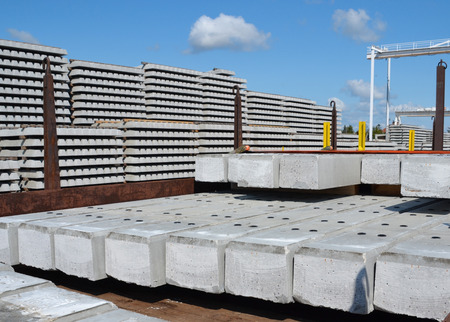
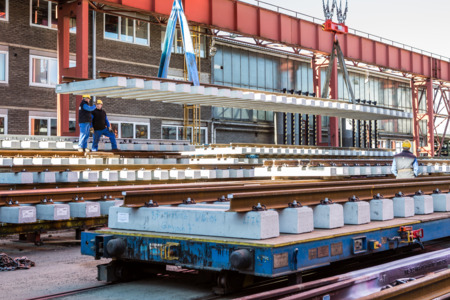
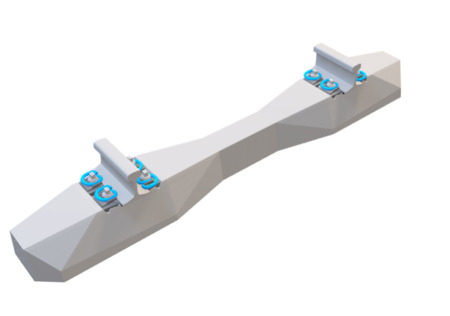
Compared to wood, steel, or plastic, concrete has established itself as the most durable and sustainable material for sleepers. Concrete sleepers have a service life of up to 50 years and are highly resistant to environmental influences. They also have low thermal expansion, which is beneficial for the stability of the track.
Wooden sleepers, on the other hand, must be impregnated to ensure their durability. In the past, substances that are considered harmful to health and have been banned in the EU were used for this purpose. In addition, tropical woods were often used, which is no longer acceptable today for climate protection reasons.
Steel sleepers are mainly used in industrial areas, but they have a poorer carbon footprint and do not achieve the same stability as concrete. Plastic sleepers are a niche product that is mainly used where low weight is important, such as on bridges. Their service life is similar to that of concrete, but recycling is difficult.