Return to overview

Rail: The central interface in the track system
24 March 2026 | 

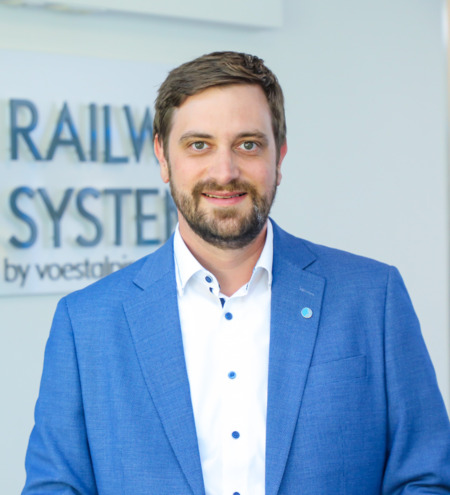
Rails are designed for extreme loads and a long service life. They can remain in service for up to 50 years on secondary lines and for up to 35 years on main lines. However, increasing traffic loads, higher availability requirements, and ambitious sustainability goals are changing the framework conditions. Sören Röhrig, Product Manager at voestalpine Railway Systems, talks about technological developments, and the path to green rail. 
Mr. Röhrig, what technological developments in rails are helping to increase the service life and safety of the track system?

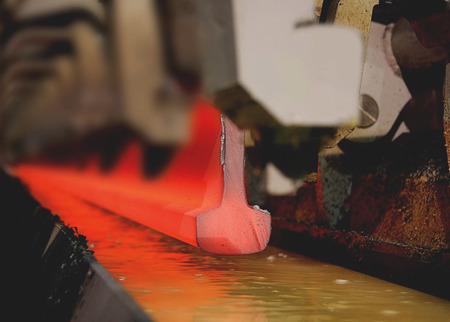
Basically, three factors determine the rail: length, shape (profile), and material. In terms of rail length, voestalpine Railway Systems has already set standards with its 120-meter railThe rail lengths of other manufacturers are 74 or 108 meters. Together with a competitor, we are now the only manufacturers offering a length of 120 meters. This allows us to significantly reduce the number of welds — from ten to a hundred weld joints per construction site. Each weld means additional construction and maintenance work and represents a potential weak point. So, we have made a significant contribution to increasing the robustness of the track and improving safety. 

How do different rail profiles affect track performance?

We offer the largest portfolio on the market, with over 130 different rail profiles. From classic railroad rails to tram rails to construction profiles for turnout construction. There are parameters at the rail head that we can pay attention to in order to improve performance. For example, we have the rail head, which influences the contact between the wheel and the rail. 

We are currently developing a rail profile that improves contact. In other words, it should be as wide as possible and in the right place so that forces are distributed optimally  even with very different wheel profiles. This not only protects the rail, but ultimately also the ballast. When traveling around curves, the correct contact geometry reduces lateral forces, so that these are transmitted less strongly to the ballast and other components of the superstructure. It even goes so far that we can protect the wheel with an appropriate head contour. 

How important is material development and how much influence does it have on rails?

Due to our proximity to the steelworks in Donawitz, we have always paid particular attention to materials. With targeted material development and a deep understanding of the wheel-rail system, we have developed material solutions for typical damage and wear phenomena. We also work intensively with simulations to understand and predict contact stresses and damage. To do this, we need measurements of rail and wheel profiles and their development over time. Ultimately, practical experience proves our success: if maintenance cycles and rail service life are extended, we know that we are on the right track. 

How does the performance of the rail affect the overall system?

The rail plays a crucial role in the overall track system. It can protect other components such as intermediate layers, sleepers, or ballast. The aim is therefore not only to extend the service life of the rail, but also to optimize the entire superstructure. The static properties of the rail—such as height or rail foot width—are decisive parameters here. The foot width allows tension and forces to be distributed more evenly across the interlayers, which also has a positive effect on other components. In our new superstructure system, we have therefore specifically optimized the ratio between the contact surface and height. Not in isolation, but in interaction with all components. That is our long-term goal: to think about the overall system. 

How does voestalpine Railway Systems help customers increase the service life of rails?

We recommend the product for the respective application and work together to develop maintenance recommendations for the optimal timing. Our digital systems, measuring systems, and expertise will help to ensure that the rail can be used for as long as possible in the future. In this way, we also make a clear contribution to sustainability.

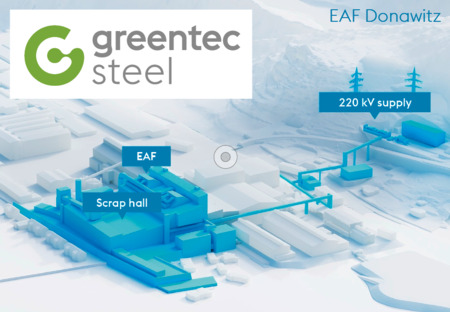
Speaking of sustainability, voestalpine aims to achieve net-zero CO2 emissions in steel production by 2050 with greentec steel. The rail is made of 100% steel, which is why this change affects us in particular. However, our research projects and strict quality controls clearly show that customers will not notice any difference in quality between steel for rails produced in a blast furnace or an electric arc furnace. The decisive advantage lies in significantly lower CO2 emissions. This is our contribution to green rail and climate-friendly railways.  

How far has voestalpine Railway Systems come in terms of recycling rails?

The big advantage of rails is that they are 100% recyclable. That is why we are also striving to establish a circular economy with our customers. For example, we have implemented a project together with the Dutch national railway company, ProRail. We took back old rails from ProRail and used them to produce new rails at our facility — with virtually no additional alloying elements. We then sent them back to the Netherlands, where they will soon be installed 

About the expert

Sören Röhrig has been head of product management rail since 2020. In addition to his role as technical contact for customers, he is primarily responsible for the approval and operational testing of new products. He is particularly motivated by the goal of establishing a rail system that has the potential to fundamentally change maintenance and thus significantly increase the availability of trains.