Retour à la vue d'ensemble

Holistic Track Systems: The benefits of integrated solutions from an expert perspective
2026-03-20 | 

Rail transport places the highest demands on safety, reliability, and cost-effectiveness. How do we meet these requirements? In our current interview series, six system experts from voestalpine Railway Systems provide insights into the various components of modern track systems — from rails, fastening systems, and sleepers to digital solutions and life cycle assessment. 
A holistic approach: How modern track systems are created

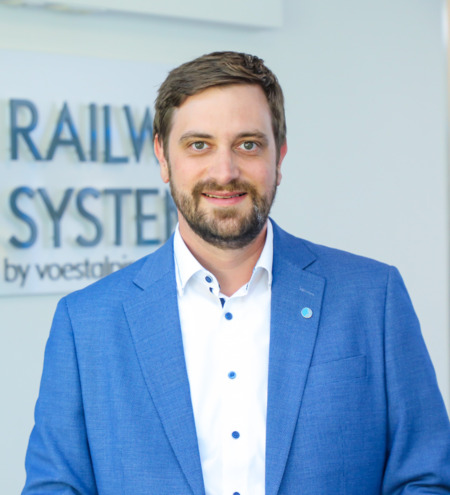
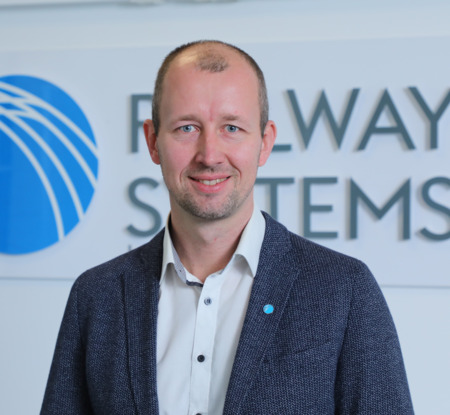
No one knows this better than Lukas Prettner. He has been working at voestalpine Railway Systems for 14 years and plays a key role in the research and development of modern track systems. 

We have learned in the past that a modern track system can no longer be optimized by individual components alone, but that the interaction of all elements is crucial.

To this end, various departments within voestalpine Railway Systems work closely together — with added value. 

If you combine all the components in a sensible way, this also has a positive impact on life cycle costs.

Click here for the full interview

Rail: The central interface in the track

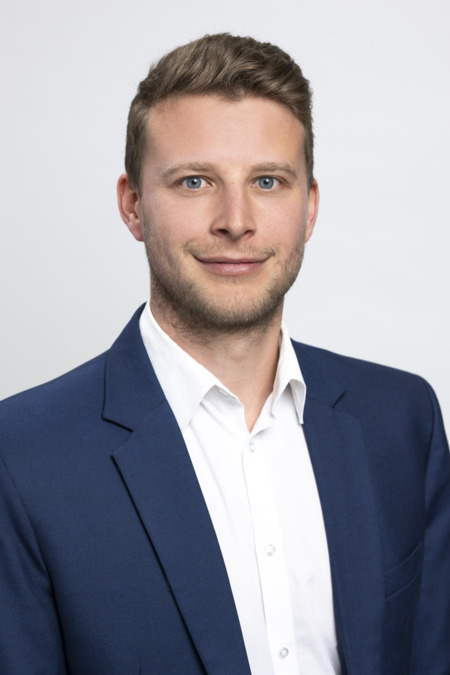
For Sören Röhrig, Product Manager at voestalpine Railway Systems, the rail plays a crucial role in the overall track. 

It can protect other components such as spacers, sleepers, or ballast. The goal is not only to extend the service life of the rail, but also to optimize the entire superstructure.

In addition to material and profile, rail length of the continuously rolled rail also plays an important role. 

voestalpine Railway Systems has already set standards with its 120-meter rail.

Click here for the full interview

Fastening systems: Small components, big impact

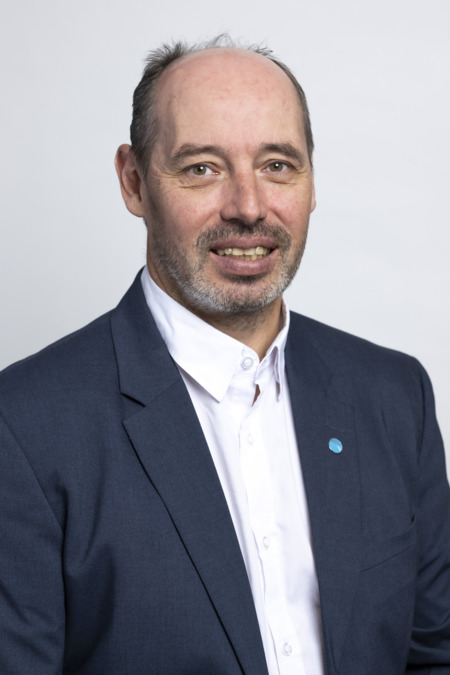
Fastening systems play a key role between the rail and the sleeper. Thomas Mayer, Vice President of R&D and Engineering Fastening Systems, knows how they affect track performance. 

They transfer vertical and lateral forces and have a huge impact on elasticity, load distribution, and vibrations in the track.

At the same time, it is important to balance conflicting interests. 

High elasticity improves load distribution, while stiffer systems reduce noise. The key here is to find the optimal compromise.

Click here for the full interview

Concrete sleepers: The underestimated component in the track

Wolfgang Hölzl has been working at voestalpine Railway Systems for more than two decades. As a specialist in the field of sleepers, he knows how important this often-underestimated component is. 

With their resistance to lateral displacement, sleepers ensure that the track remains stable, does not deform, and the train cannot derail.

Ballast wear is one of the main challenges. Larger contact surfaces help, but they are technically limited. 

The challenge is therefore to achieve the largest possible contact surface and thus optimal load distribution within these technical limits.

Click here for the full interview

Digitalization: Greater transparency through innovative technology

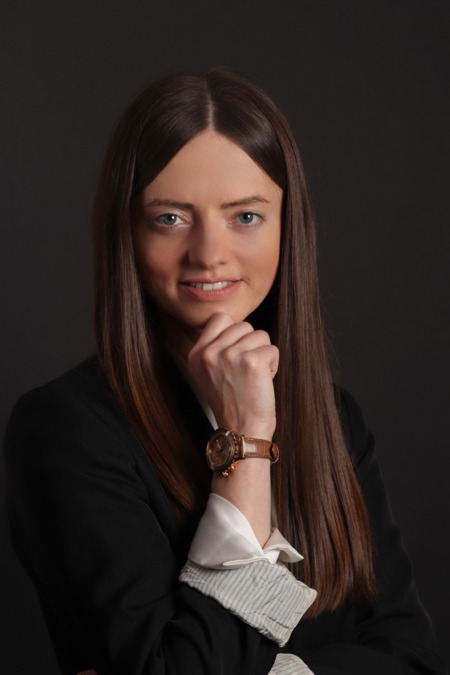
Sandra Baltic, digitalization expert, has been working at voestalpine Railway Systems for three years. Parallel to the continuous development of physical components, digitalization is also advancing steadily. 

With the help of technologies such as RFID, we can precisely identify and locate every rail and track its condition throughout its entire service life.

The goal: a digital twin of the track system. 

For customers, this offers the opportunity to compare performance, select components based on performance, plan track interventions, and achieve higher network availability.

Click here for the full interview

Life cycle and circular economy: Rethinking sustainability

As a systems expert for sustainability and circular economy, Christian Aichberger is certain that sustainability in railways begins with considering the entire life cycle. The service life of individual components plays a decisive role in this. 

If a product lasts twice as long, emissions can be practically halved over the period because less new production is necessary.

That is why topics such as re-use and circular economy are becoming increasingly important. 

Especially in less polluted areas, the targeted re-use of suitable old turnouts instead of newly produced ones is a good option.

Click here for the full interview

System thinking, life cycle optimization, and digital integration

The high-performance track system from voestalpine Railway Systems is not only the result of continuous optimization of individual components, but also of understanding and targeted further development of the overall system. This enables us to improve quality and performance holistically.