Retour à la vue d'ensemble

A holistic approach: How modern track systems are created
2026-03-23 | 

The number of trains is constantly increasing  a trend that is set to continue. The question is: How can I create a highly available and robust overall system that does not require constant intervention? How does voestalpine Railway Systems use its track systems to not only keep up with growing demands but also stay one step ahead. Lukas Prettner, Head of Research and Development Track Systems, provides a comprehensive overview. 
Mr. Prettner, how would you define a modern track system, and which components are crucial for a holistic view?

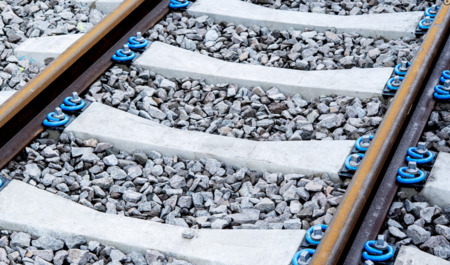
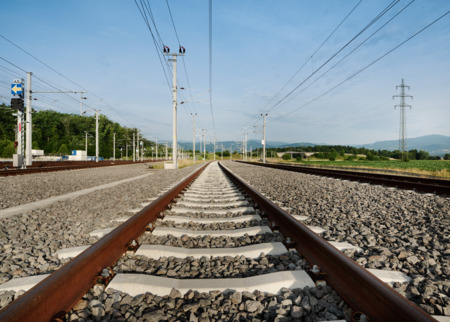
We have learned in the past that a modern track system can no longer be optimized by individual components alone; rather, the interaction of all elements is crucial. If individual components wear out significantly faster, they limit the overall service life of the track. We therefore strive to homogenize the service life in order to extend the life span of the entire track structure. The behavior of the ballast, for example, can be particularly critical. This is because ballast degrades over time. This affects riding comfort and necessitates expensive track maintenance. However, the rail must also be considered as part of the system so that it can deliver its full performance. 

How does voestalpine Railway Systems take a holistic approach?

Various departments within voestalpine Railway Systems work together to achieve this. We have built up expertise in rails, sleepers, fastening systems, and also across the board in the area of digitalization. With all these components, we are able to positively influence and digitalize the entire system. In recent years, we have also made targeted investments in technology and system understanding. Combining all components in a meaningful way also has a positive impact on life cycle costs. This approach of viewing the individual components as a complete system therefore has enormous potential to improve the economic efficiency of the railway system. 

How does voestalpine Railway Systems support customers with customized solutions?

In the area of technology, we have developed three pillars with regard to track system development. First, we build up an understanding of the overall system. To do this, we use simulation tools, our own test track, and test benches for wheel-rail contact. This allows us to assess the effects of changes digitally in advance.

The second pillar is system design. We have conducted extensive parameter studies using new simulation tools to understand how the track must be optimally designed in order to achieve maximum benefit under given boundary conditions. Based on these findings, we develop customized solutions, for example for mixed traffic or tram systems. We also use simulation tools in consulting projects. Customers often come to us with specific questions. We then work together on the problem and find a solution together. 

What role does measurement technology play in the track system?

With solutions such as the Mini Checkpoint, we can record the stress on the rail and see what has rolled over it and where the contact point between the wheel and the rail is. The aim is not only to measure wear at specific points, but also to understand the actual stress patterns in the track. By using our measuring systems, we also obtain results on wear, waviness, track alignment, and cracks in the rail. With the help of state-of-the-art testing technology, we can analyze what is really happening on the track in a very professional manner. We strive for perfection in all areas. 

What services does voestalpine Railway Systems offer to optimize the entire life cycle of the system?

Service life is the biggest cost factor and also significantly influences the ecological assessment of the track. I have high initial investments and need to maintain the benefits for as long as possible to keep depreciation low. However, our goal is also to reduce maintenance for all components  in particular, we are aiming to protect the ballast and extend the service life of the rail in the system. This is achieved through elasticity, rail profile, or appropriate sleeper designs. We see enormous potential here. 

We evaluate the impact of measures on life cycle costs using our LCC tool. From vehicle simulation and finite element analysis to data-driven models for wear or rolling contact fatigue  all of this ultimately flows into the LCC assessment. This allows us to precisely calculate the impact of design changes on costs and availability. 

How is voestalpine Railway Systems supporting the transition to sustainable infrastructure?

As manufacturers, we are currently focusing heavily on new production routes that reduce CO emissions. However, it is not only technologies such as greentec steel that are helping us make significant progress, but also the choice of cement types that have enormous CO reduction potential. Here, too, an important factor is the extension of service life. If I extend the usage cycles, I need fewer resources and materials. This also has massive ecological savings potential. Circular economy and digital product passports are also gaining importance. The challenge is to link the physical product to the database so that products can be tracked throughout their life cycle. We have developed solutions such as our Digital Touchpoint Rail, which we intend to continue promoting. 

What does the future hold for digital track systems?

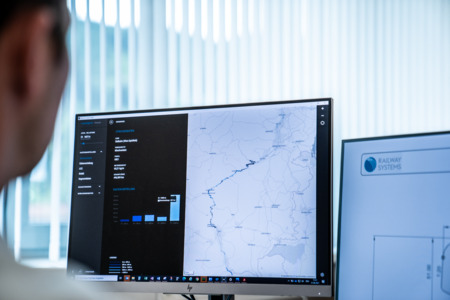
The basis is a digital touchpoint between the product and the database. Then I need suitable database systems, such as our zentrak system. This allows me not only to record product data and locate it correctly, but also to record status data. For example, how are my rails and tracks performing? With monitoring and simulation models, we can make predictions.

But there is even more potential in digitalization. The status data can also be used for quality management. How can I ensure that my product is in the right place and has been processed correctly? I have transparent visibility in one system, which makes it easier to track. That's a huge advantage. 

About the expert

Lukas Prettner joined voestalpine Railway Systems in 2012, working in technical customer service and product management. Today, he heads up Research and Development Track Systems and is responsible for rail material development and welding technology, among other things. He is particularly motivated by the opportunity to work with customers to understand and optimize the railway system.